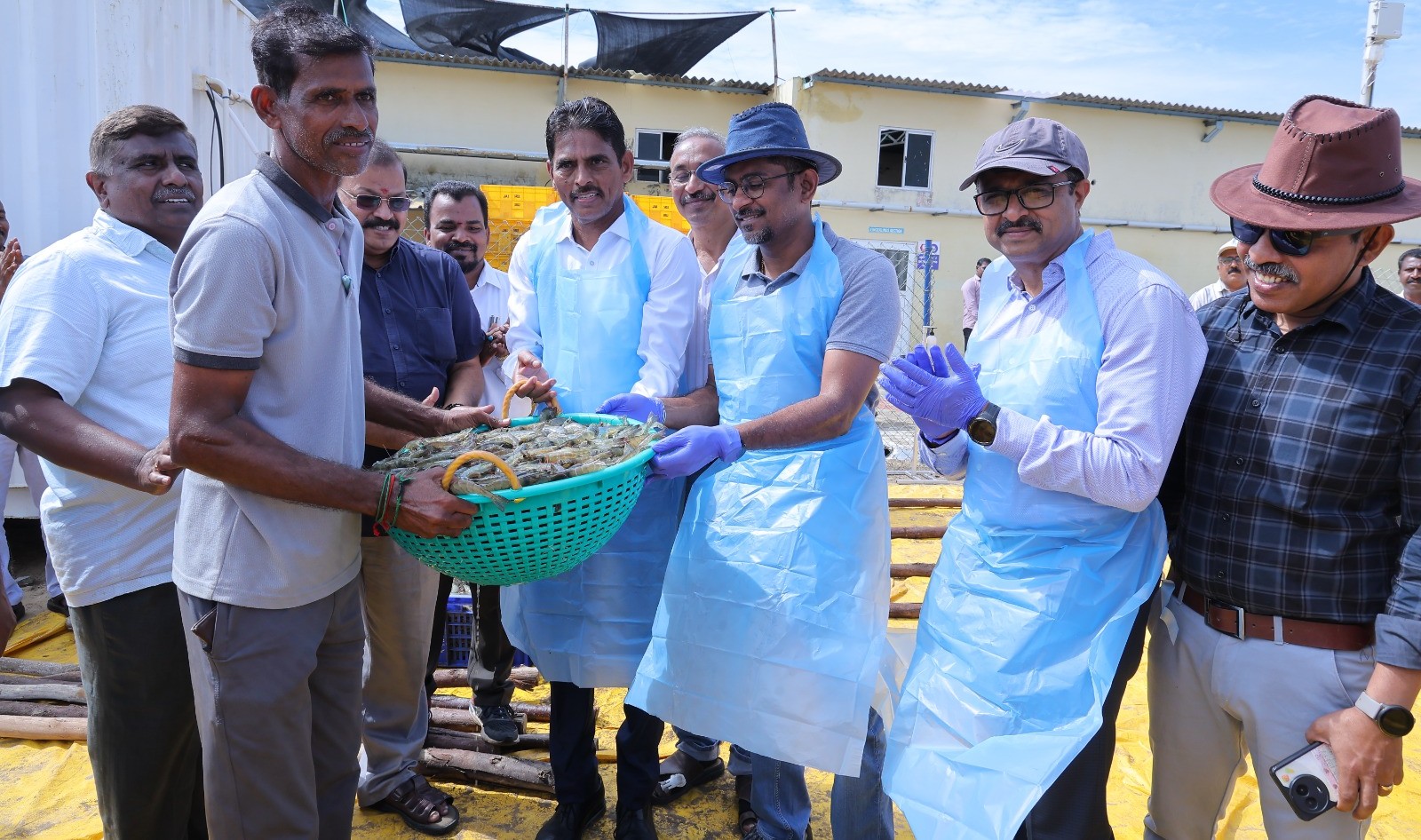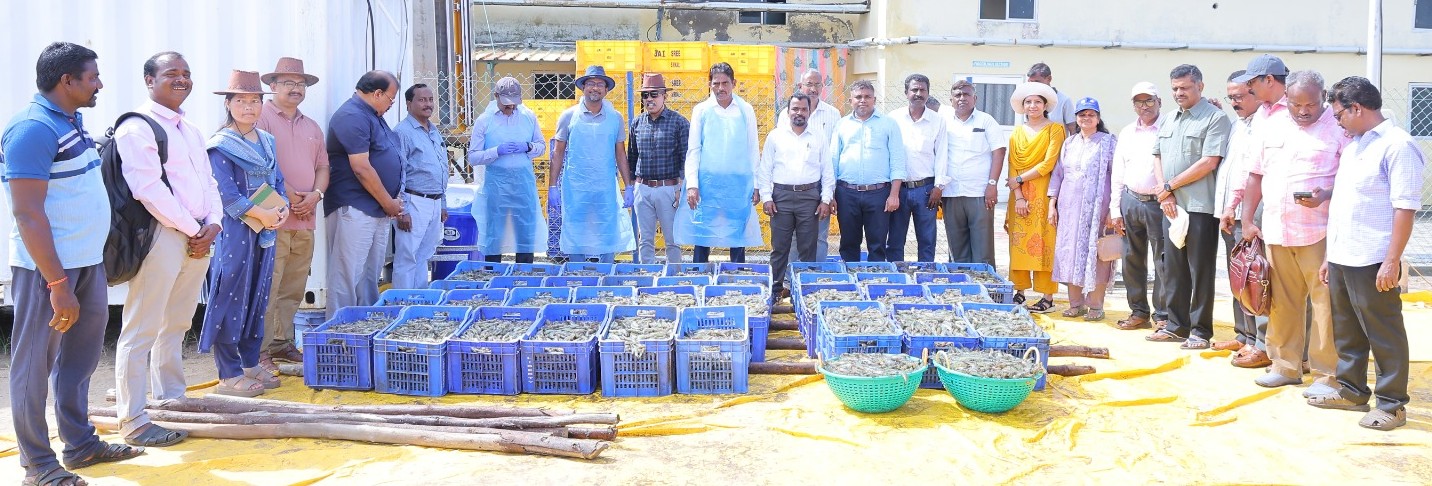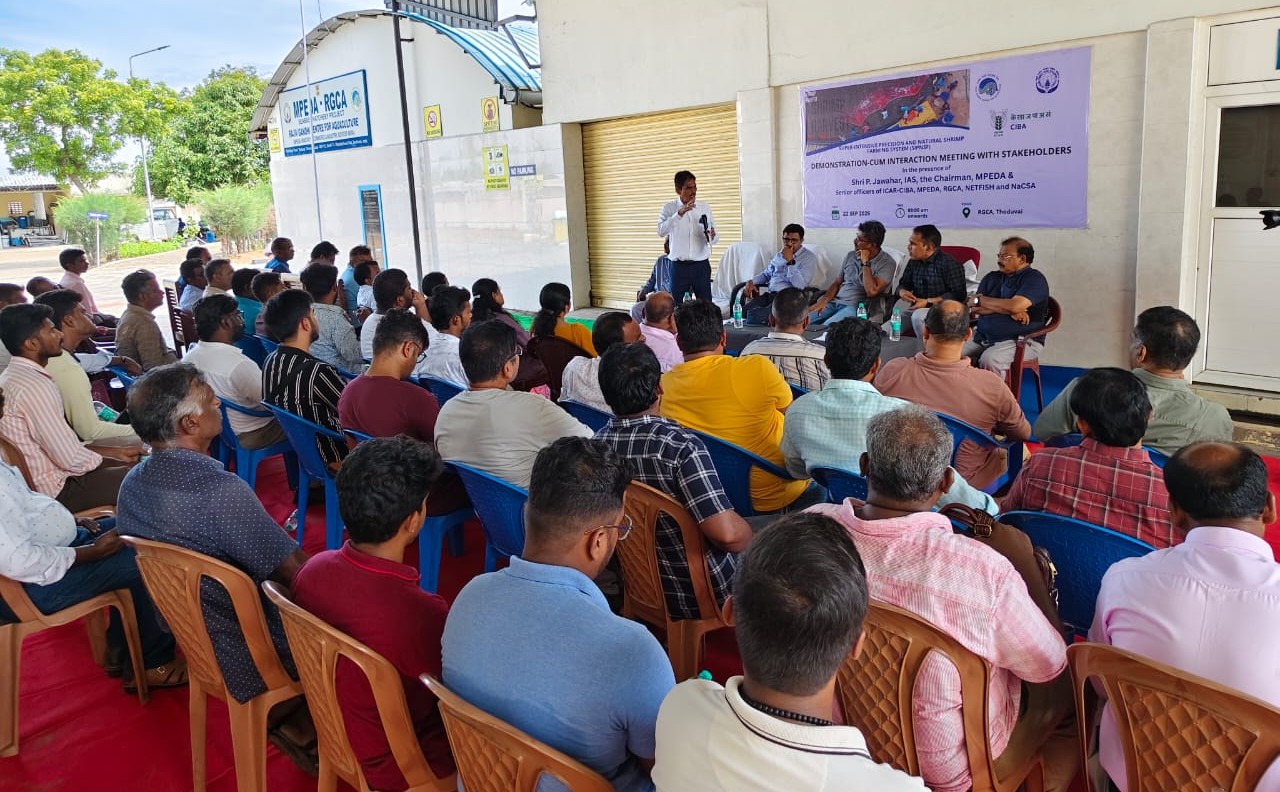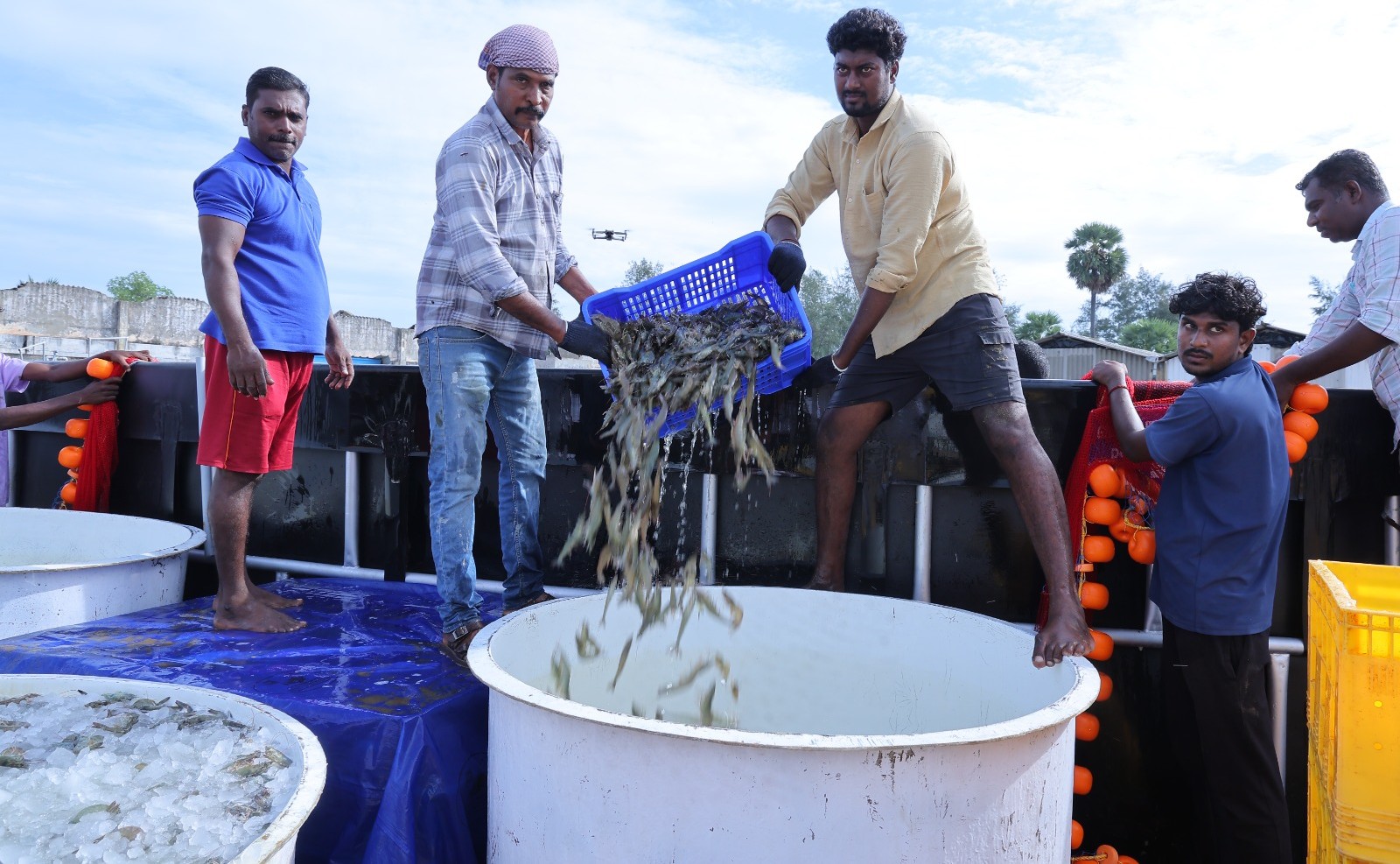
ICAR-CIBA’s Super-Intensive Precision and Natural Shrimp Farming (SIPNSF) technology, a Made-in-India next-generation shrimp production system, is emerging as a promising model for enhancing shrimp productivity and supporting the fisheries sector’s contribution to the Viksit Bharat vision. To demonstrate the potential of this innovative technology to the shrimp farming community, the Marine Products Export Development Authority (MPEDA) has supported the establishment of a SIPNSF frontline demonstration facility at the RGCA Hatchery Complex, Thoduvai, Sirkali, Tamil Nadu. As part of the collaboration an on-farm interaction meeting-cum-shrimp harvest was conducted at the facility on 22 September 2026.
The shrimp reached an average harvest size of 20 g in 108 days, including a 30-day nursery phase. The system produced 5.3 tonnes of shrimp from two 500-m³ tanks, achieving a productivity of approximately 53 tonnes/ha/crop, with an FCR of 1.0 and a reported production cost of approximately ₹210/kg. The harvested shrimp, weighing around 20 g each, fetched a farm-gate price of ₹350/kg. This harvest marks the 19th consecutive successful shrimp harvest achieved through the SIPNSF technology across different locations in the country, demonstrating the consistency and adaptability of the production system under diverse farming conditions.
Shri.P. Jawahar, IAS, Chairman, MPEDA, along with senior MPEDA officials and shrimp farmers from the region, witnessed the second consecutive successful harvest from the SIPNSF demonstration facility. The Chairman underscored that CIBA’s SIPNSF could be a pathway for achieving Viksit Bharat goal of enhanced production from the available resources. He further stated that MPEDA would explore opportunities to popularise the SIPNSF model among new-generation entrepreneurs, including through suitable support and subsidy mechanisms. Upcaling this technology as a vertical shrimp production system and tinkering the model to suit the existing small-scale farmers needs further research he articulated.
Representing the Director, ICAR-CIBA, Dr. K. Ambasankar, Head, Nutrition, Genetics and Biotechnology Division, presented the performance data of SIPNSF demonstrations conducted across different agro-climatic regions of the country. He highlighted the successive technological improvements made by ICAR-CIBA to enhance the efficiency, scalability and farmer-friendliness of the system. The improved SIPNSF technology has demonstrated production levels of 40–50 tonnes/ha/crop, with the potential to achieve 100-120 tonnes/ha/year through three production cycles under suitable conditions.
The interaction programme provided an opportunity for shrimp farmers, MPEDA officials and trainees to understand the principles, operational requirements, economics and production performance of the SIPNSF system. Nearly 100 MPEDA officials, trainees and shrimp farmers participated in the programme and interacted with the ICAR-CIBA team. The successful harvest and stakeholder interaction at Thoduvai reaffirmed the potential of SIPNSF as a high-productivity, precision-based and resource-efficient shrimp production model, with scope for adaptation across different scales of shrimp farming and agro-climatic conditions.