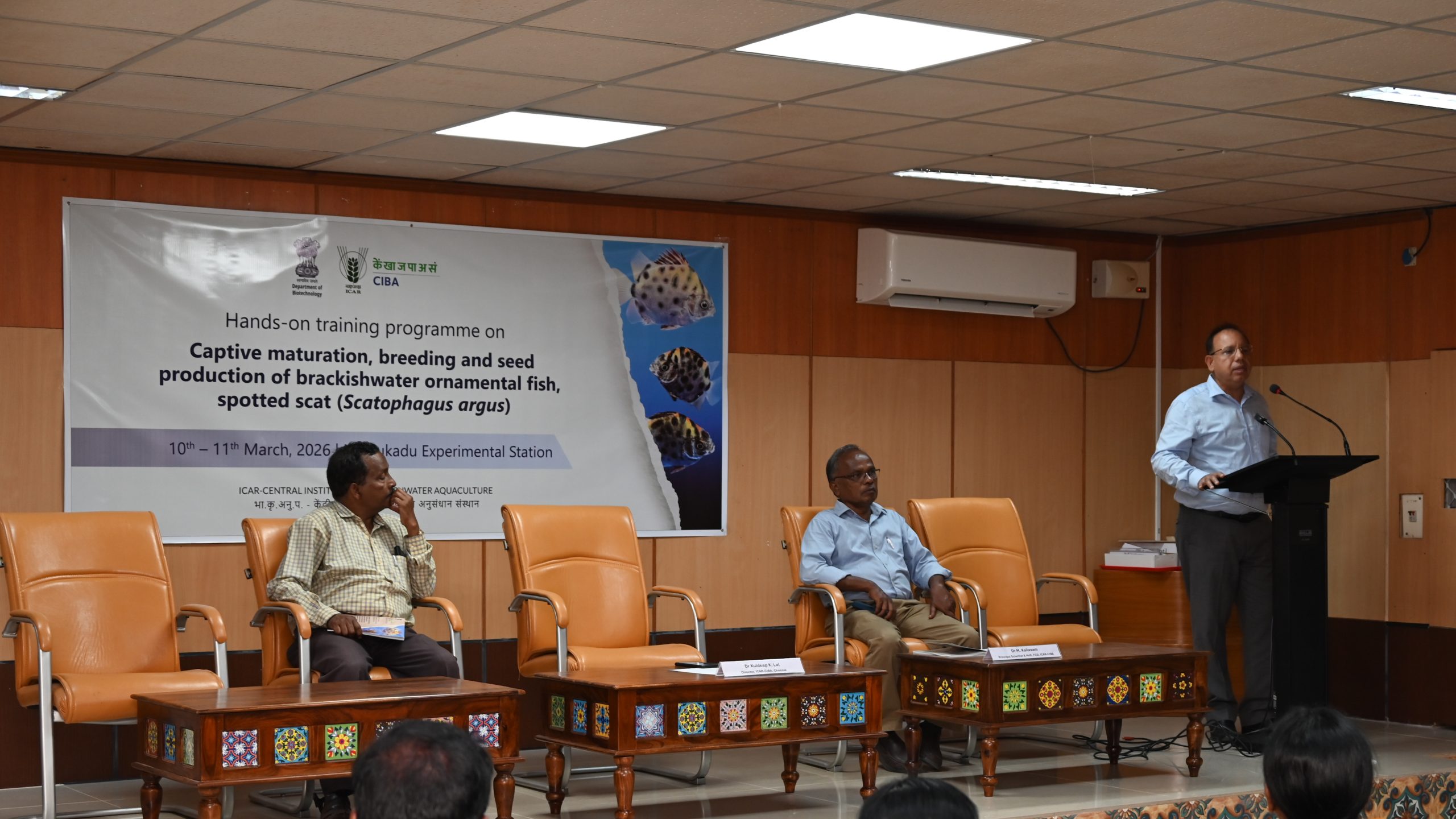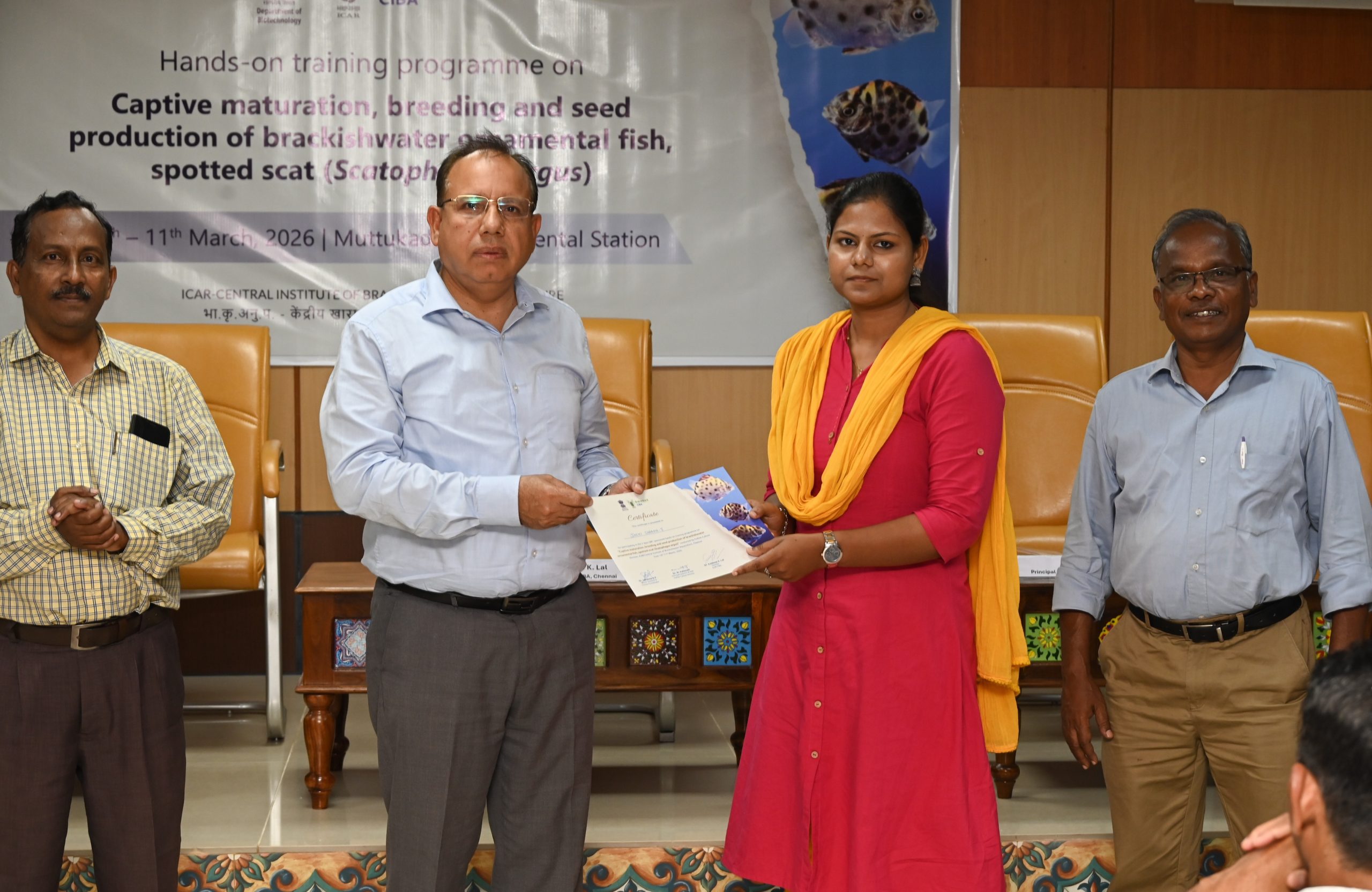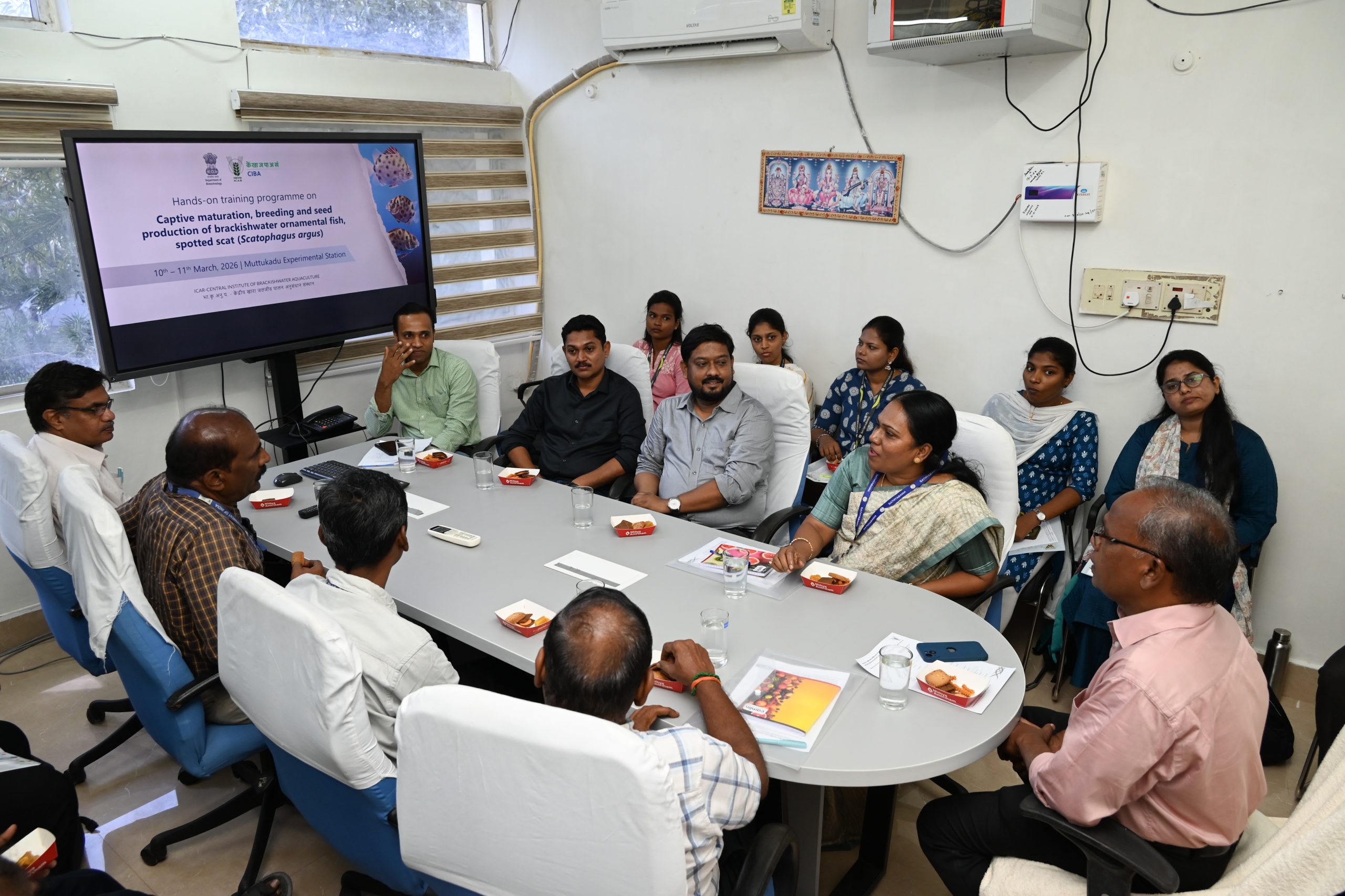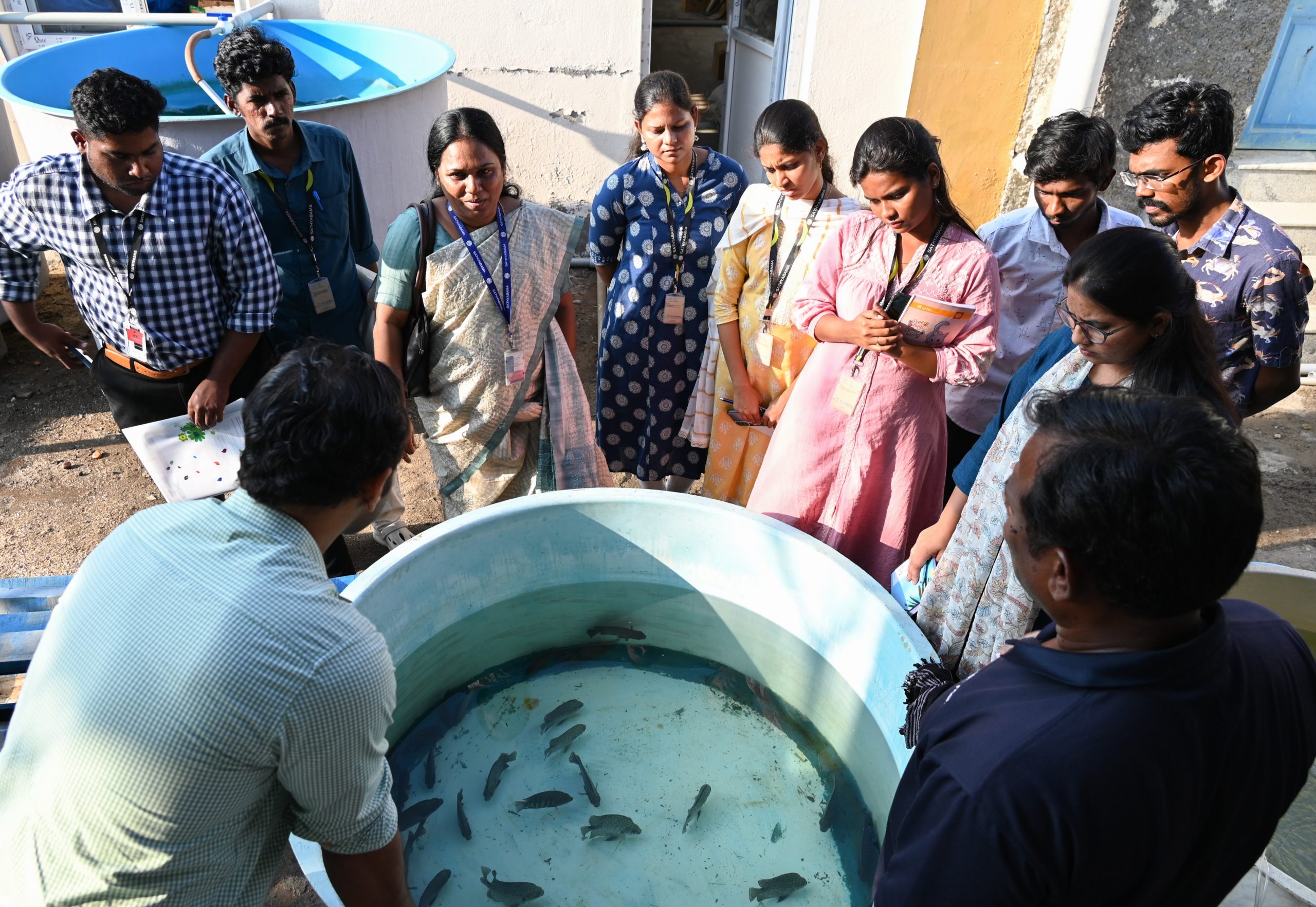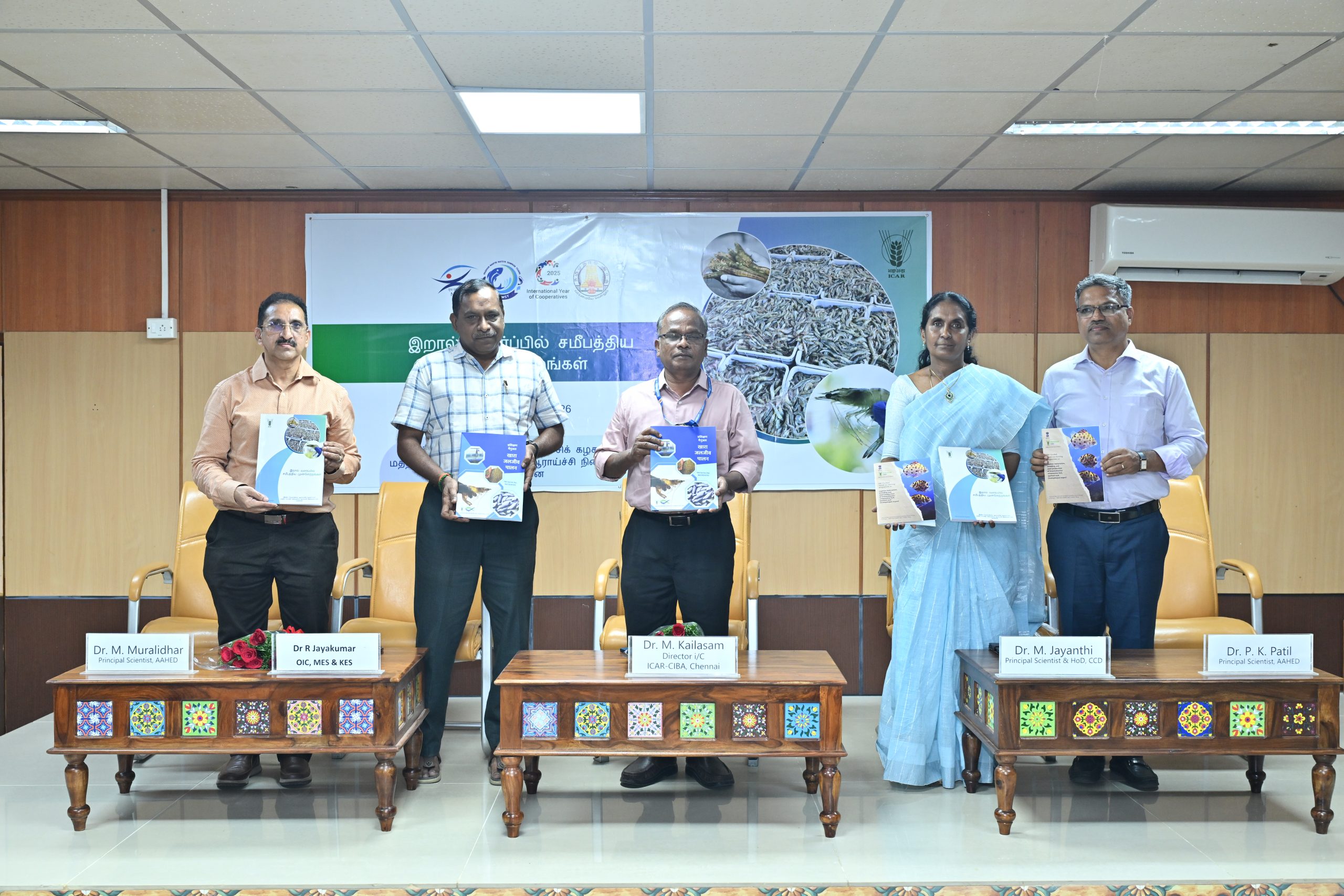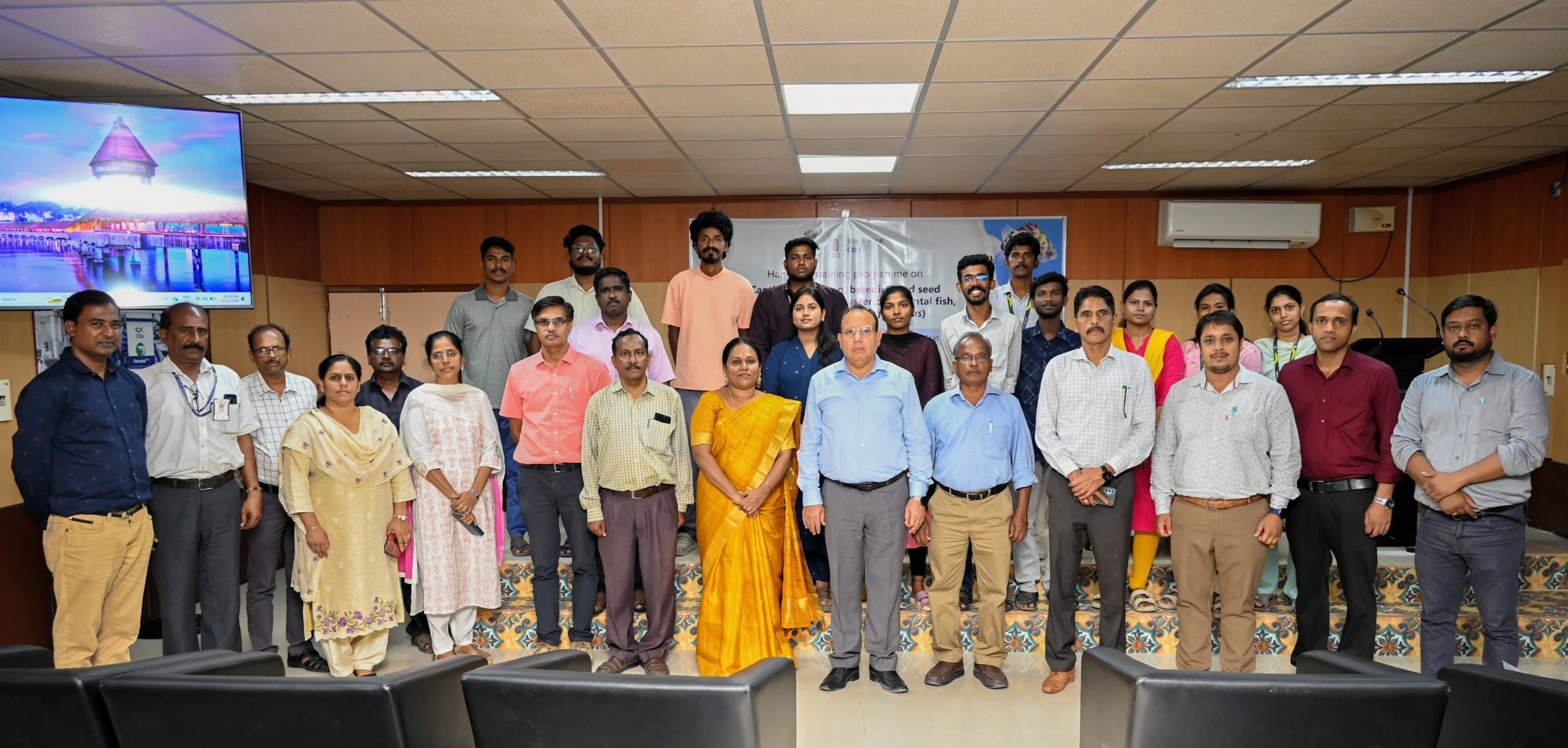
The ICAR–Central Institute of Brackishwater Aquaculture (ICAR-CIBA), Chennai, successfully organized a two-day Hands-on Training Programme on Captive Maturation, Breeding and Seed Production of Brackishwater Ornamental Fish, Spotted Scat (Scatophagus argus) on 10–11 March 2026 at its Muttukadu Experimental Station. The programme was conducted under the DBT-funded collaborative project titled “Unravelling the genetic variation among the scat (Scatophagus argus) populations of India through captive breeding and molecular markers.” The project is implemented in partnership with Tamil Nadu Dr. J. Jayalalithaa Fisheries University (TNJFU), Chennai and Sathyabama Institute of Science and Technology, Chennai. A total of 15 participants, including academicians, researchers, students and technicians, attended the training programme. During the inaugural ceremony, a comprehensive training manual on captive maturation, breeding and seed production of spotted scat was released, providing detailed technical guidance on broodstock management, breeding protocols, larval rearing techniques and hatchery practices. The training sessions covered a wide range of topics, including recent advances in brackishwater finfish aquaculture, ornamental fish resources of India, biology and reproductive characteristics of spotted scat, captive broodstock development, breeding and larval rearing protocols, live feed production and enrichment, nutrition and formulated feeds, hatchery system design, water quality and environmental management, health management strategies, and hapa-based nursery production models for coastal livelihood support. Practical demonstrations enabled participants to gain hands-on experience in hatchery operations and seed production techniques.
During the valedictory session, Dr Kuldeep K. Lal, Director of ICAR-CIBA, highlighted that spotted scat is an important brackishwater species with considerable potential both as an ornamental and food fish. He expressed satisfaction that the captive breeding technology developed at ICAR-CIBA will be disseminated through the project to establish additional production centres across the country. He also emphasized the importance of strengthening research partnerships with universities and research organizations. Dr M. Kailasam, Head of the Fish Culture Division at ICAR-CIBA, underscored the significance of captive breeding technologies in ensuring a reliable seed supply for farmers and supporting sustainable aquaculture development. The training programme was coordinated by Dr Sandeep K. P., Senior Scientist, and Dr Dani Thomas, Scientist, of the Fish Culture Division, ICAR-CIBA. Dr K. Ambasankar, Head of the Nutrition, Genetics and Biotechnology Division, and Dr R. Jayakumar, Officer-in-Charge of the Muttukadu Experimental Station, were also present during the programme. The programme concluded successfully with active participation and interaction from the trainees, reflecting the growing interest in brackishwater ornamental fish breeding and hatchery technologies.